


Mission
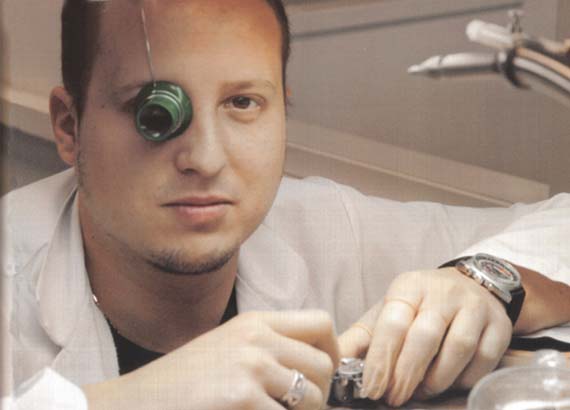
We repair watches and clocks as they should be repaired. Timepieces have financial, cultural or sentimental value, and we are here to preserve and protect those values.
The diversity of watches and clocks calls for a diversity of skills and knowledge. Particular problems, however, require particular solutions supported by in-depth specialist knowledge.
Preserving the broad range of old and new knowledge and skills within our craft enables us to tackle both varied and unusual problems.
We live the craft of watchmaking, recognised as world cultural heritage, bringing together age-old handcraft techniques and modern, innovative service methods every day.
The workshop in Oppenheim was founded in February 2014. From the outset, the focus was on repairing watches and clocks. Watch retail was initially set aside, partly because of the high demand for repairs. After the workshop was certified by Omega and other Swatch Group brands in 2015, the long-term supply of spare parts for repairing many watches could be secured. In 2016, the workshop was expanded by a further 25 square metres and case restoration was developed further. As specialist work, such as restoring sunburst finishes during case restoration, greatly increased the workshop’s reach, clock repairs were discontinued in 2018 due to staff shortages. Further certifications, including TAG Heuer, followed. With the workshop continually expanding and important machines being added, such as a micro-welding unit and a 3D printer, the first two new employees joined in 2022: an apprentice and a watchmaker.
Watchmaking has been with me since my earliest childhood: a fascination passed on by my father that steadily grew. Nevertheless, I initially took the route everyone took: university after school … I chose “Physics of the Atmosphere”. Although I greatly enjoyed studying at Mainz University, I became increasingly aware that a career as a meteorologist was not for me. Semester by semester, I grew more restless, until I finally realised I had to follow my calling to become a watchmaker.
I left everything behind and moved with my wife (we were not yet married at the time) to Pforzheim to learn the craft at one of Germany’s finest watchmaking schools, the “N.G. Hayek Watchmaking School”.
It soon became clear that this decision could not have been more right. From the outset, I flourished in the craft and eagerly absorbed lesson after lesson. Watchmaking is a meeting place for the finest handcraft and theoretical mechanics, offering challenges at the highest level in both practice and theory.
I created my first table clock in my first year of training. By the third year, I was ready to take on the highest challenge of craftsmanship in watchmaking: alongside the demanding training curriculum, I designed and handmade a flying tourbillon. I completed my training as Germany’s top apprentice in 2012.
Alongside the German journeyman qualification, I also earned the WOSTEP certificate, the qualification from the international WOSTEP watchmaking programme. The programme included chronograph training, making balance springs and turning the finest watch components, and teaches the very high standards required for repairing watches in “haute horlogerie”.
After completing my training, I joined Omega’s chronograph department, where I soon repaired complicated chronographs of all ages and other Omega calibres. Here too, I was quickly able to work on an equal footing with experienced colleagues and received an internal award for excellent quality and productivity after only a few months.
At the end of 2013, I decided to open my own watchmaking workshop. I have been a self-employed watchmaker in my home town of Oppenheim since 1 February 2014, and a master watchmaker since October 2015.
During my work in the workshop since 2014, however, something became clear to me: no matter how much I do to oppose the decline of watchmaking, and no matter how many watches and clocks I repair, one person alone cannot stop it … Read more under “Challenge”.
I see traditional watchmaking in great danger, along with the whole profession and the knowledge of its classical methods. At the same time, it becomes impossible to protect the cultural heritage embodied by many watches and clocks if there are no qualified repairers left. There are only a few good watchmaking workshops remaining, and some colleagues are approaching retirement or looking for better-paid occupations. In recent years, a great many workshops among my acquaintances have closed. If too much of the foundation disappears, watchmaking will suffer irreversible damage and the traditional watchmaking workshop will die out.
The current wave of closures in watchmaking has many causes. Alongside the increasing difficulty of obtaining spare parts, due to the expensive certification required by most manufacturers, spare-part prices and overheads have generally risen so far that economically viable repairs are not easy. Many watchmakers actually live from watch sales and use these to finance their workshops. Little wonder that “it isn’t worth repairing” is heard so often.
In a one-person business, motivation for repairs declines, and the quality and range of repair work deteriorate badly; or the watchmaker closes. Jewellers working with this cross-subsidy calculation will pass only poor salaries on to the workshop and can often retain only unqualified or unmotivated watchmakers.
The other side is the continued existence of low-cost workshops offering miserable quality at an even worse value for money. This endangers the reputation of the whole industry and also severely damages the underlying substance of many watches and clocks.
Finally, demographics are also a major problem for watchmaking. In 2022, around 600 watchmakers retired, while only around 100 new journeymen qualified through the German chambers of industry and commerce and chambers of skilled crafts. By 2032, the number of watchmakers in Germany will have approximately halved.
Watchmaking needs to enter the present day: without an absolutely structured way of working and consistently good quality, a stable position in the market cannot be secured. Today’s administrative requirements are enormous, and the cost of machines and equipment for a modern watchmaking workshop is so high that using them alone becomes uneconomical.
The era of working alone seems to be over. A solution must be found to bring traditional watchmaking into the future … Read more under “Vision”.
We want to preserve the knowledge and skills of watchmaking and maintain, or restore, the possibility of repairing timepieces. In our workshop, methods and procedures are developed, taught and passed on that combine tradition with quality and modern productivity. The knowledge and skills of watchmaking must be preserved for the future, and watchmakers must receive recognition for following their calling.
To achieve this, we need to inspire and train more people in watchmaking, promote master watchmaker training and make watchmaking knowledge accessible in a modern way.
Thinking in terms of competition belongs to the past. The number of watchmakers must be increased dramatically to prevent the profession from disappearing.
Remarkable
+ screws fitted
+ components fitted
million tick-tocks
escape-wheel kilometres
Our certifications
Omega
Tag Heuer
Longines
Union Glashütte
Rado
Mido
Tissot
Hamilton
Customer reviews
Kai B.
I had a watch serviced by Mr Israel. The result is outstanding: the watch runs perfectly again and looks like new …(Google review)
Philipp
If there were 10 stars, I would award them. It doesn’t get any better. Mr Israel truly is a master of his craft …(Google review)
M R
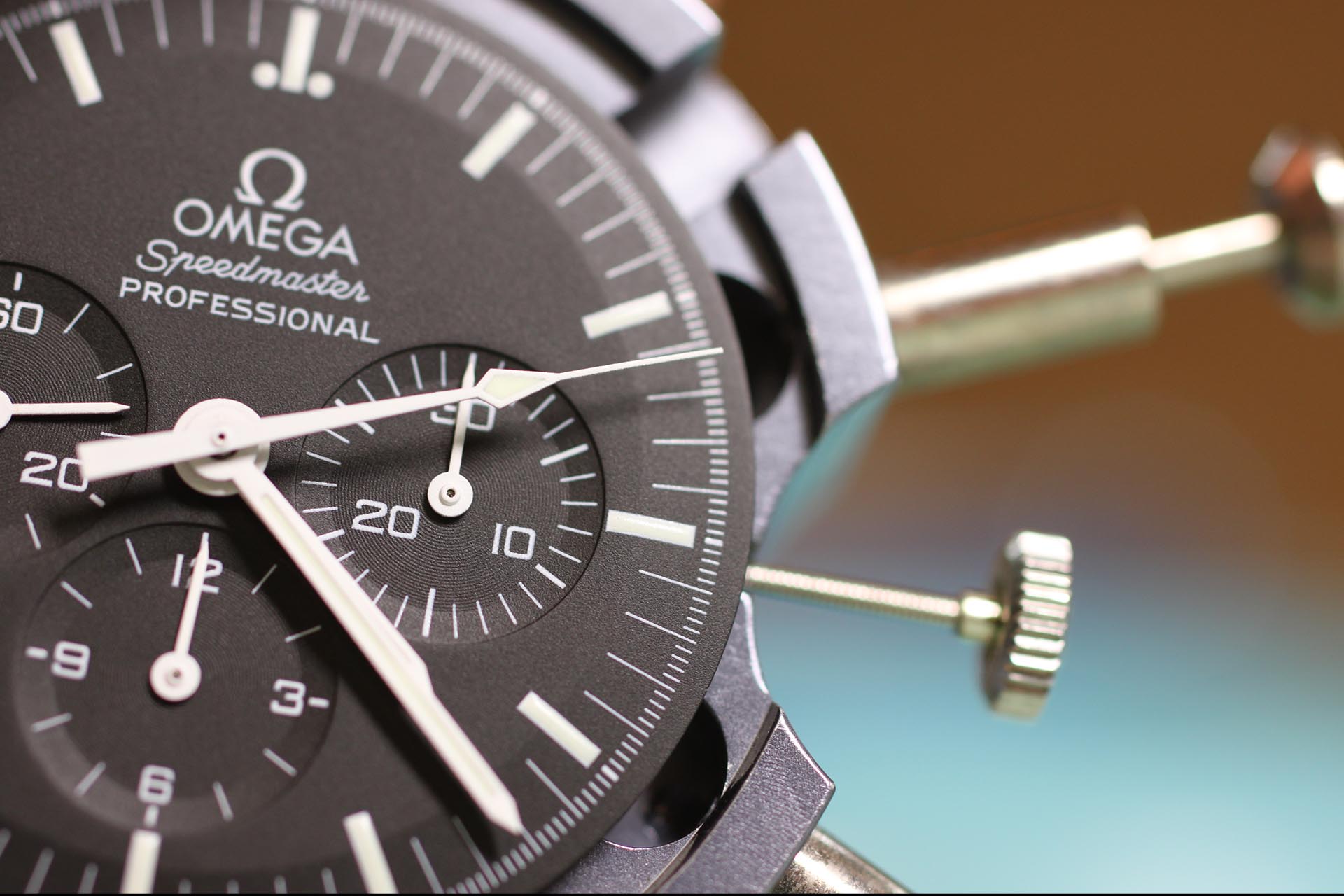
I entrusted my Speedmaster, which is over 20 years old, to Robin Israel for a complete service, and I am delighted. Shipping, communication and the work carried out: all excellent! …(Google review)
Paco Voegelin
Excellent service! I entrusted my Speedmaster to Mr Israel for repair. From the initial contact and communication about the quotation to return shipping, everything went absolutely perfectly …(Google review)