Making a hand pipe
Central hand of a chronograph
A damaged hand pipe is a recurring discovery during watch repairs. Either the hand separates from its pipe when removed, often destroying the pipe, or the pipe is cracked and can no longer be pressed on securely.
This problem occurs particularly often with the chronograph seconds hand.
Obtaining a new hand is not always possible, but such a hand can usually be repaired.
In this case, the pipe of the central chronograph hand is cracked; it belongs to a Wakmann Regate chronograph with calibre Lemania 1341:
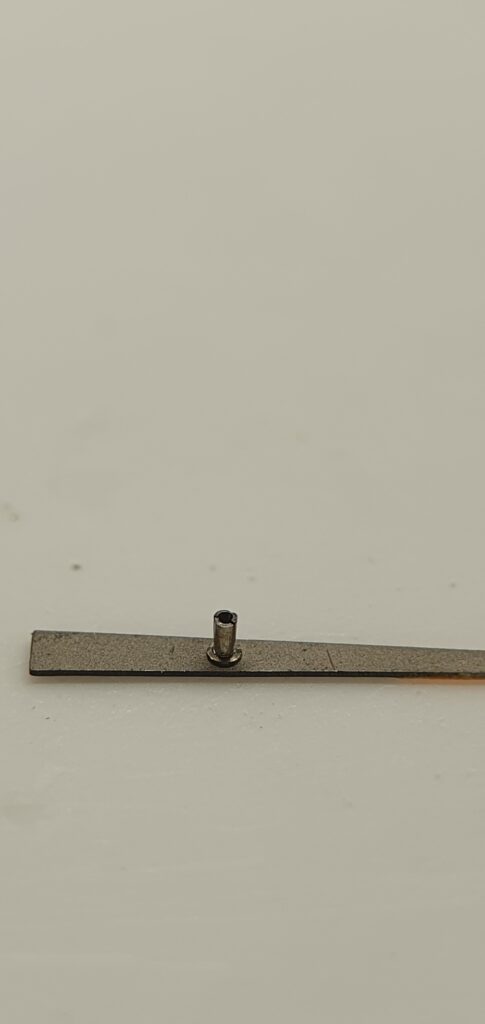
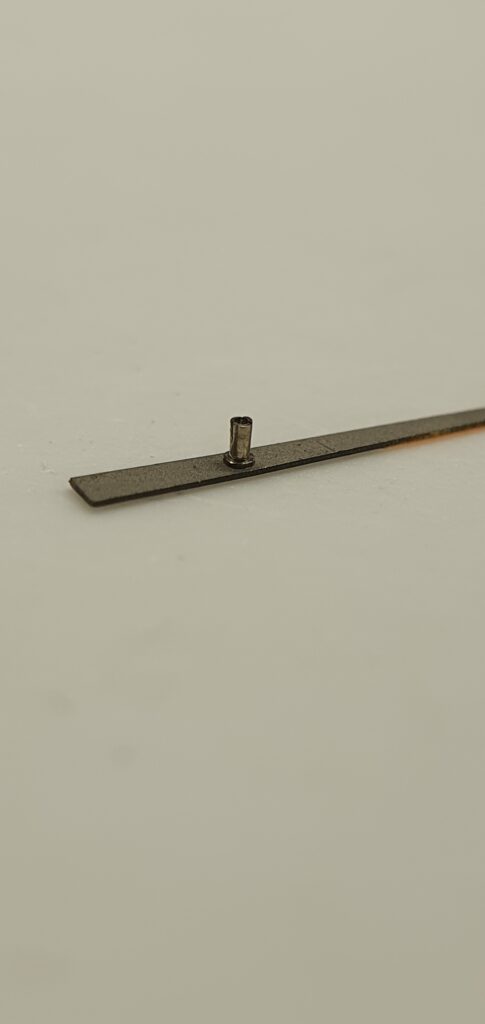
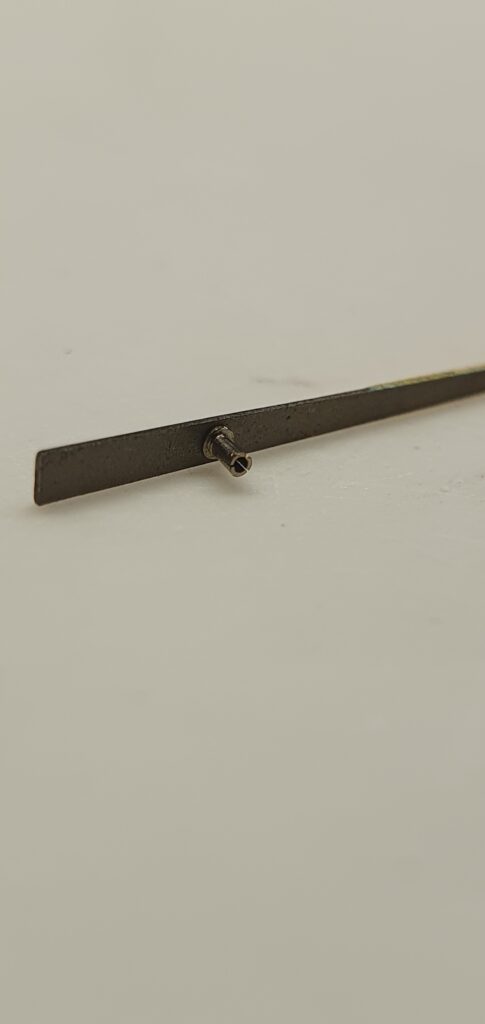
The pipe must be replaced. After an unsuccessful attempt to weld the cracks with the PUK, replacement becomes unavoidable.
The old hand pipe is held from below in a pin vice, and the riveting collar is carefully removed with a countersink without damaging the hand.
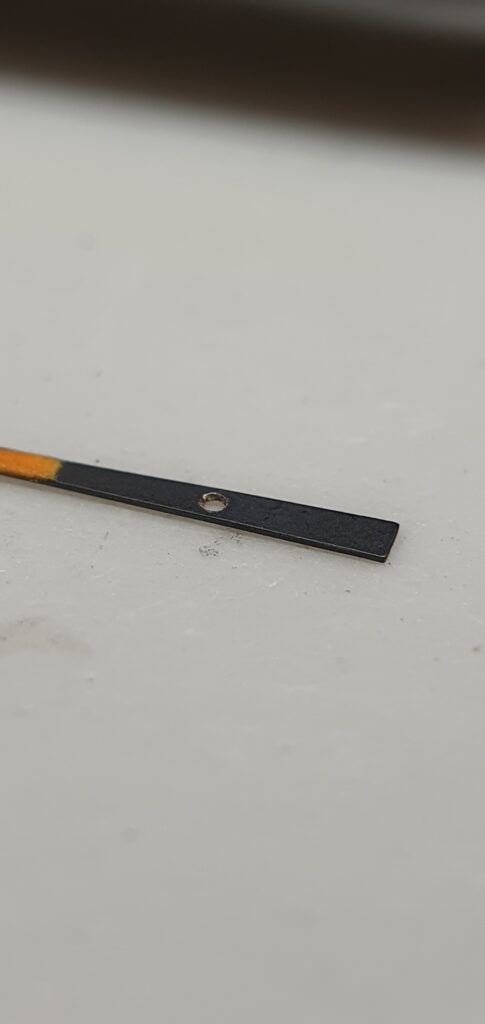
No suitable hand pipe can be found in stock, so one must be made.
Rather than machining and drilling a piece of solid stock from scratch, it is advisable to use the closest-fitting bushing wire. The bore should be one to several hundredths of a millimetre smaller than the diameter of the hand’s arbor.
First, the fit for the riveting collar is turned. Measurement is unnecessary: the shoulder is turned slightly tapered with a hand graver, gradually approaching the correct diameter. As soon as the hand can be started onto it easily, the taper is reduced to the diameter at its tip.
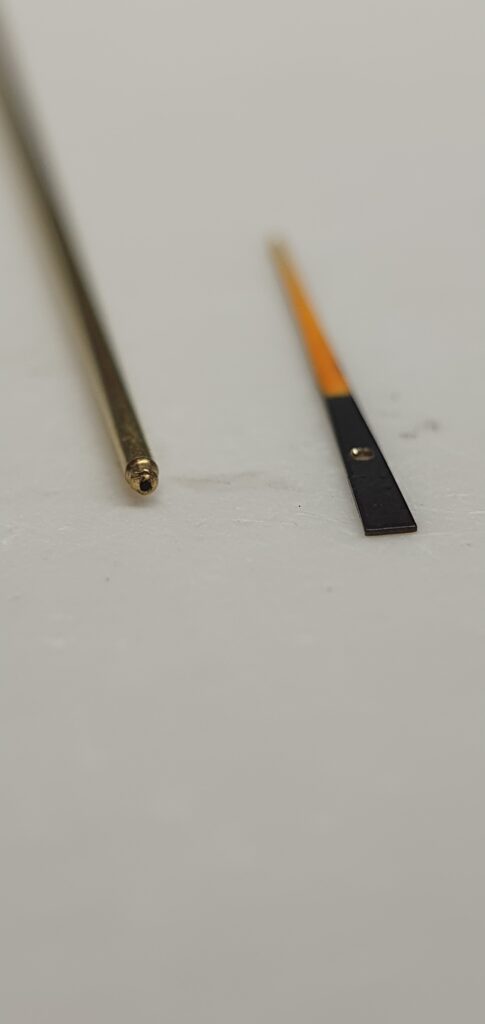
Without removing the work from the lathe, the back of the hand pipe is also turned with the hand graver and then parted off.
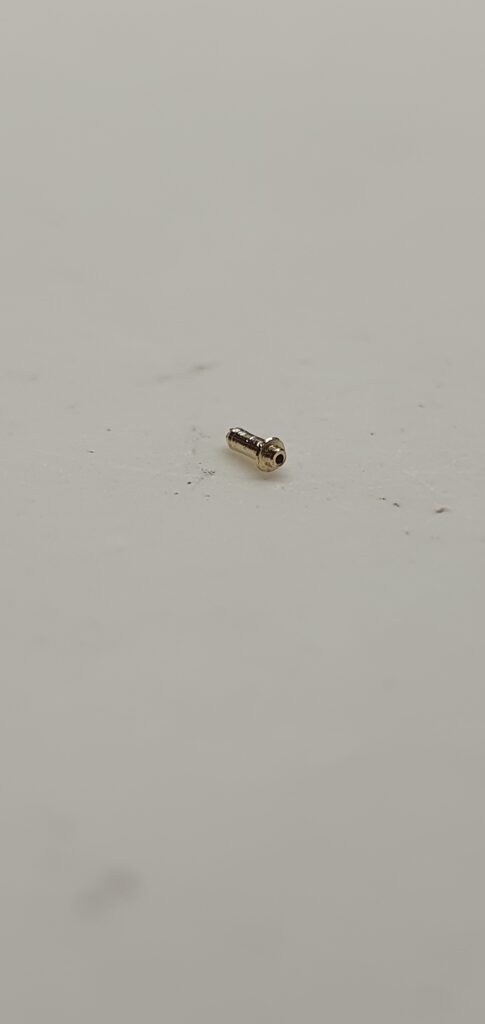
The hand is then fitted and the pipe riveted. A staking tool is used: first, a pointed stake spreads the riveting collar outwards slightly, after which a larger ball-ended stake completes the riveting.
Riveting requires a very delicate touch, as the fine hand pipe will crack under even the slightest excessive force.
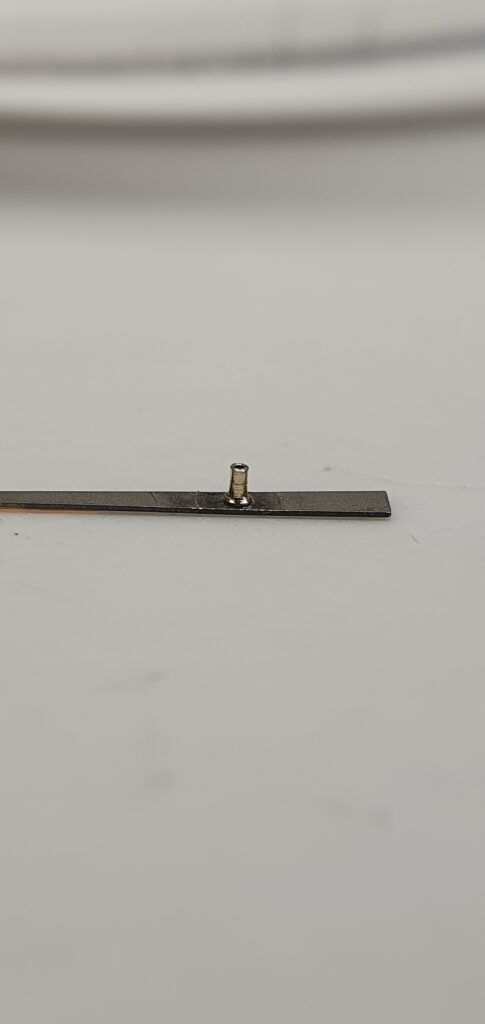
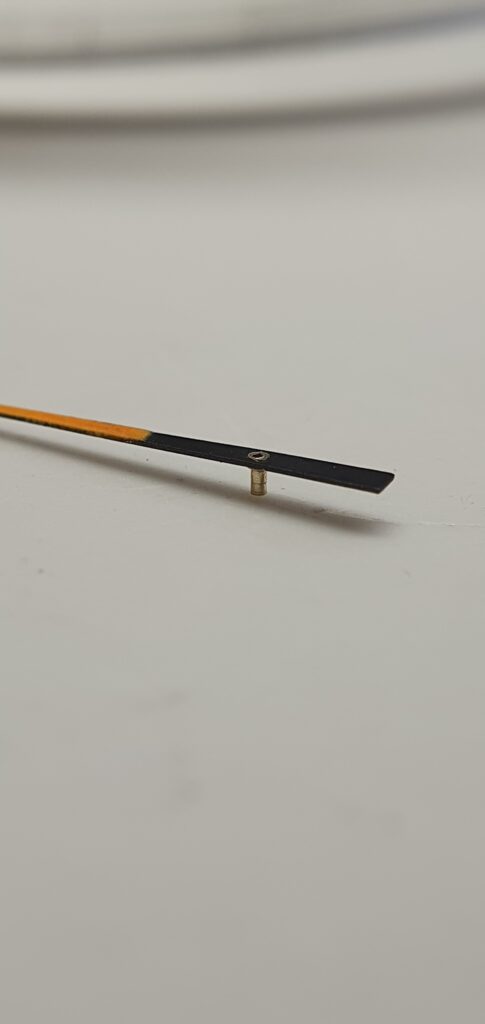
Before fitting the hand, the bore diameter is adjusted with a pivot broach. Because of the resetting force when returning to zero, the central chronograph hand must fit very tightly, but it must also be possible to remove it again without separating it from its pipe. Here, too, the watchmaker has considerable experience: sensitively adjusting an interference fit is a normal skill taught during training.
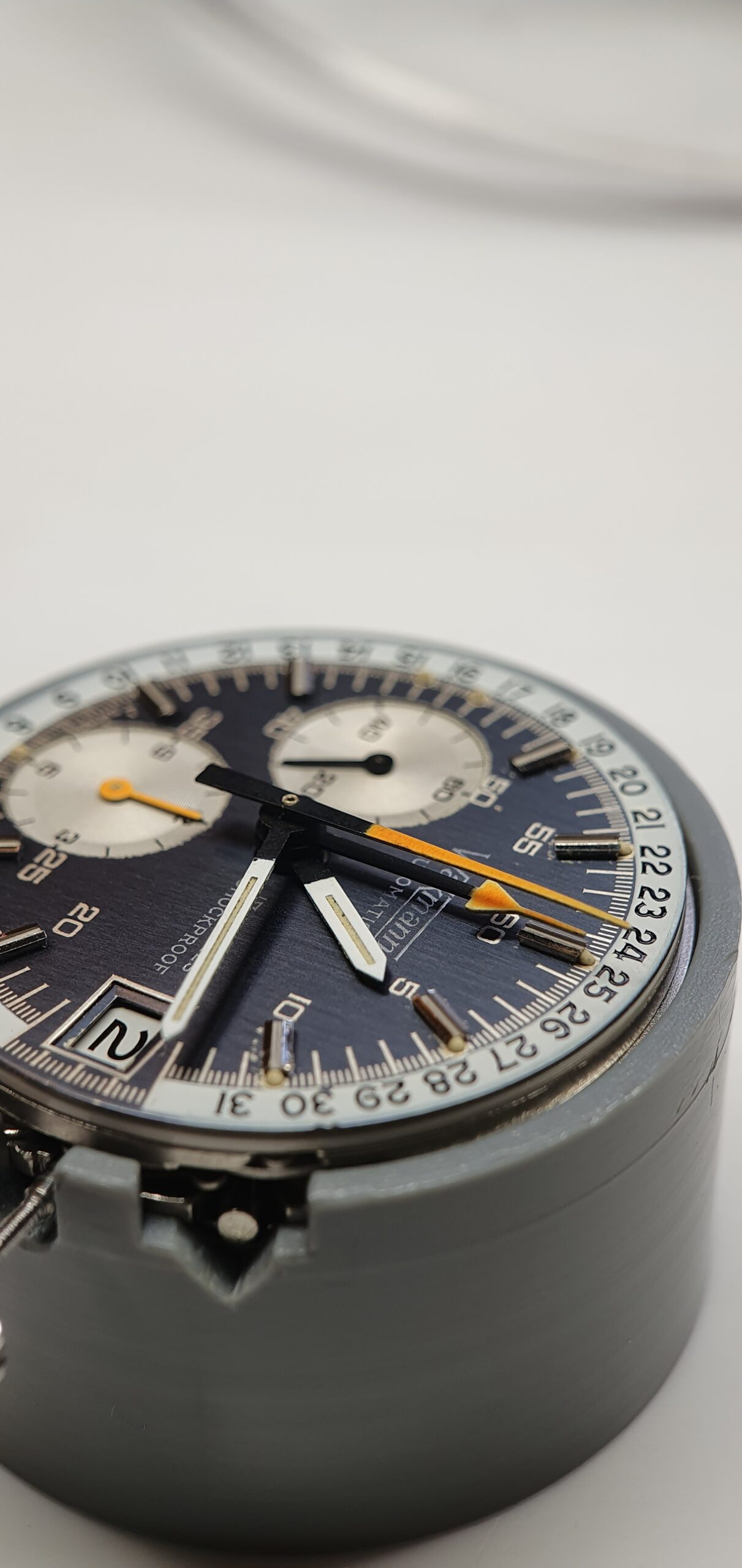
As the final step, the hand pipe is repainted. A red oiler applies the paint quickly in a single pass, as such small amounts begin to cure within seconds.
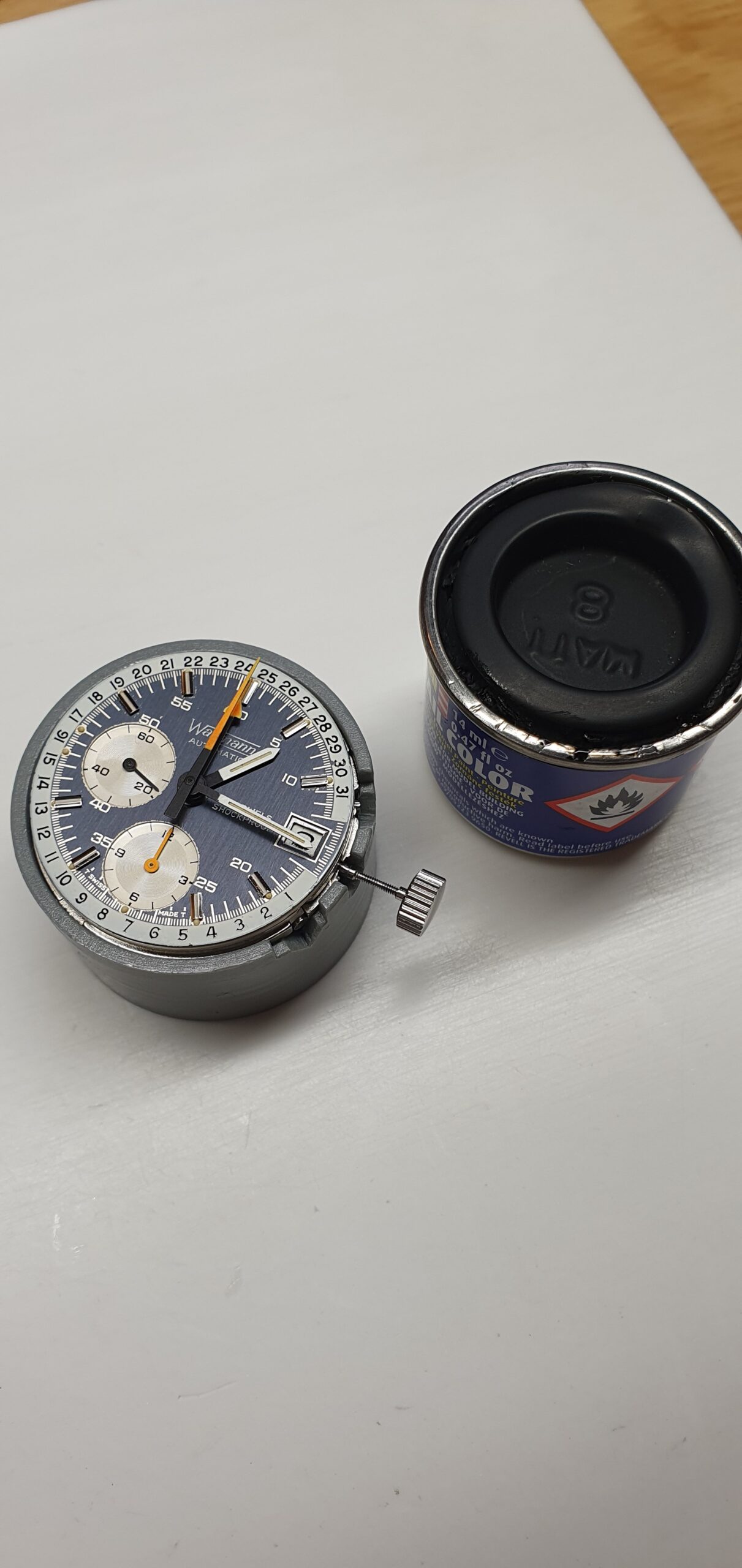
Try not to fill the central bore completely with paint, as this does not match the hands’ original condition; the bore is normally left unfilled.
The pipe was deliberately painted only after assembly, because the paint takes days to harden sufficiently to resist being rubbed off when the hands are pressed on.
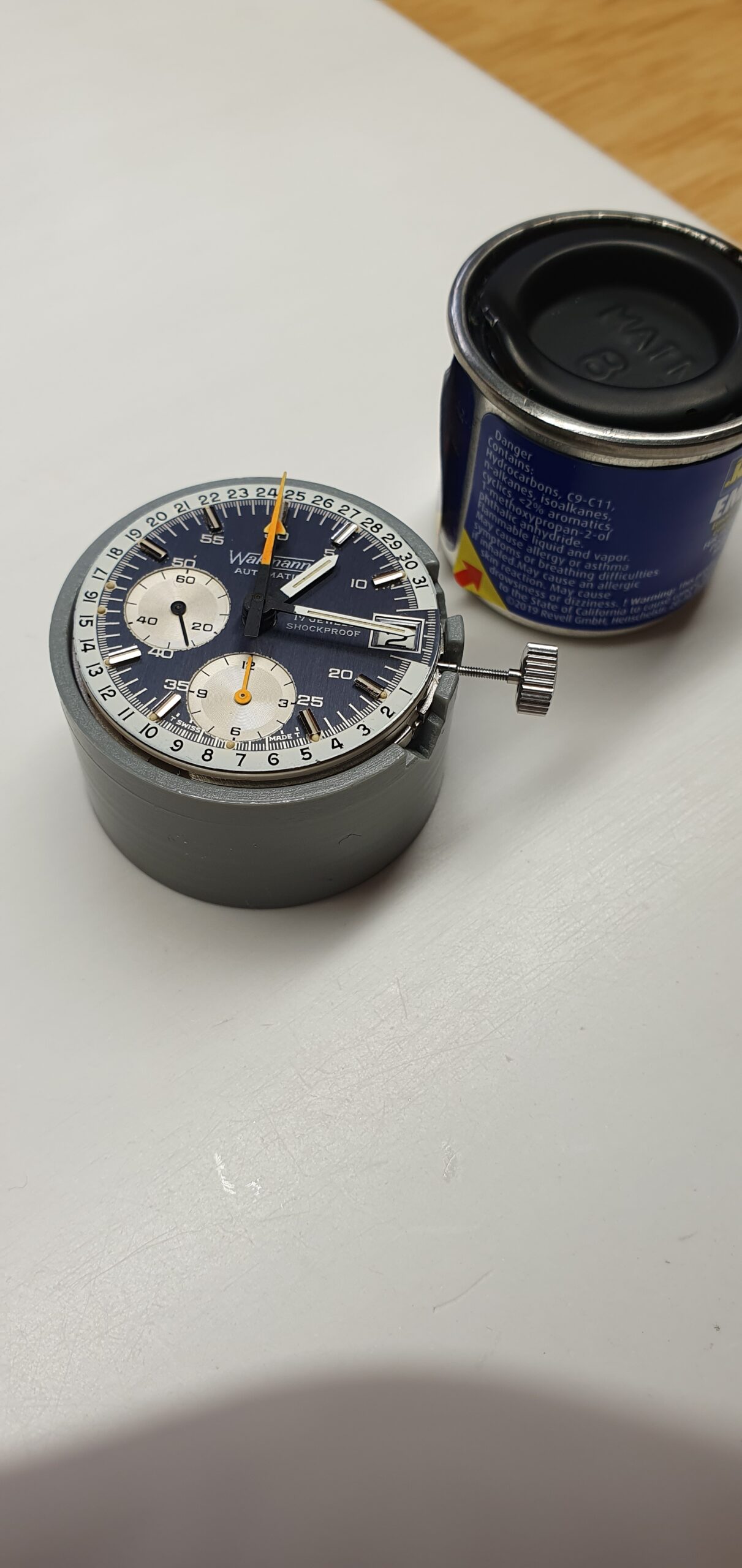
The movement is now ready to be fitted back into the case.