Replacing crown seals
The problem
Vintage watches sometimes have valuable original crowns for which exact replacement parts are no longer available. Replacing the crown can sometimes cause a substantial loss of value.
After decades, however, crown seals are often as hard and brittle as old cork, or have chemically deteriorated into a tar-like paste. Not only is their protection against dust and moisture then lost: the seal itself can even release particles into the movement.
A seal also relieves the load on the winding stem’s bearing in the plate during manual winding. A defective seal can therefore lead to severe and almost irreparable damage to the movement’s mainplate.
Replacing the seal is also advisable in older diving watches, as unsuspecting users often wear them swimming without a second thought: after all, that is what it says on the dial…
For all these reasons, it can make sense to keep the watch’s crown rather than replace it, removing the old seal, gently removing hard deposits and corrosion, and fitting a new seal.
For crowns with hardened seals or damage to the sealing surface, this often requires removing the crown’s retaining ring and sometimes making a new one.
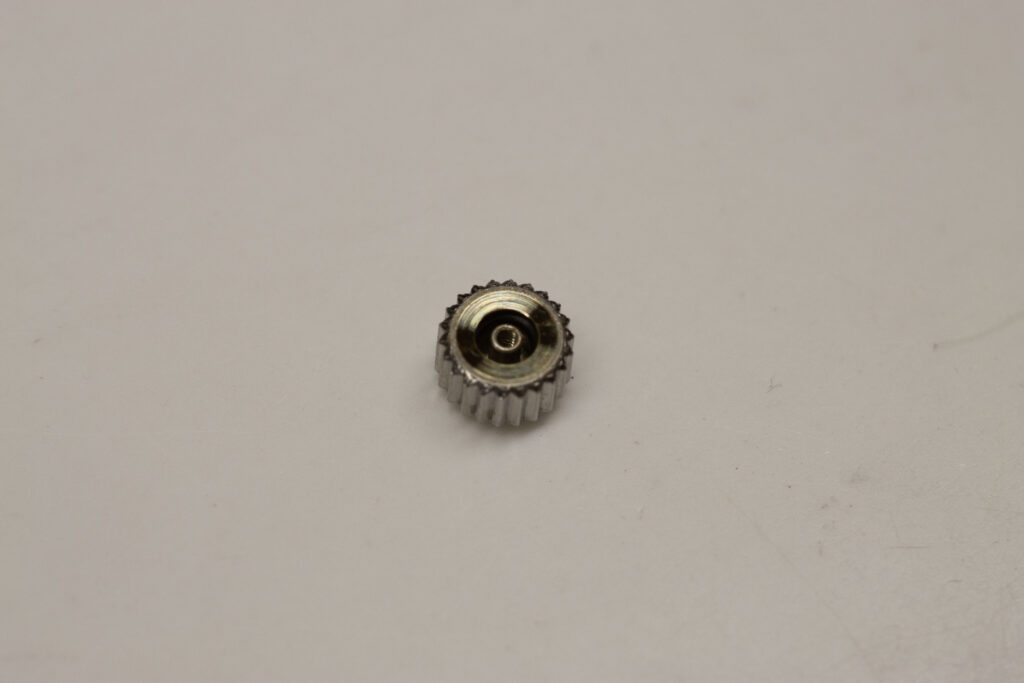
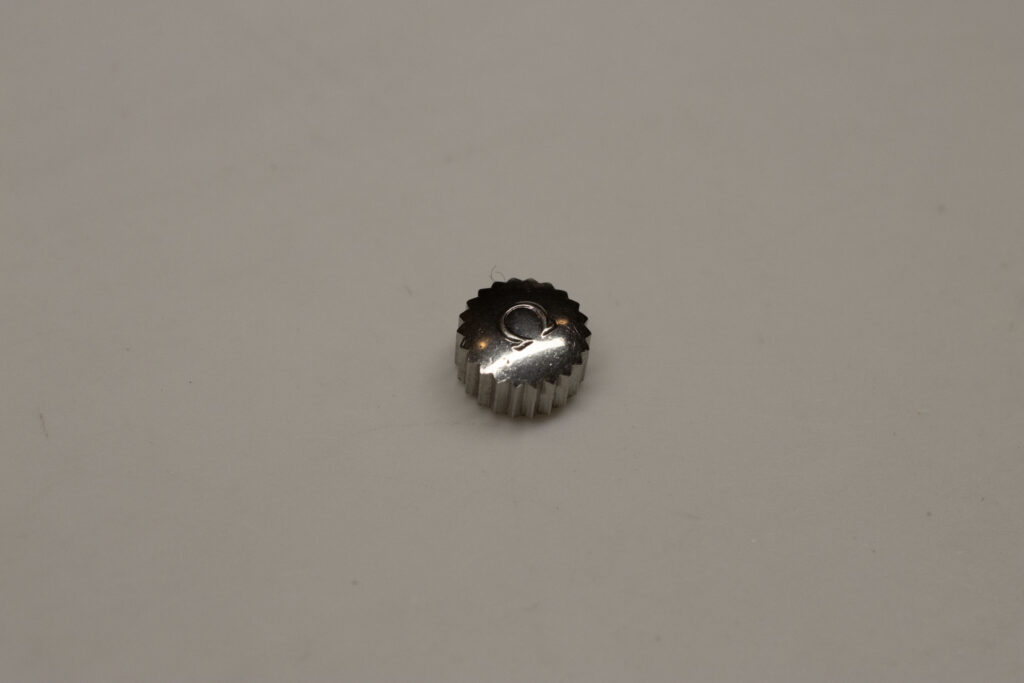
The old ring can sometimes be reused, and a specially made puller can also sometimes be used.
When choosing the correct seal, its cross-section should exceed the gap between the tube and the crown’s inner sealing surface by at least 0.05 mm, or preferably 0.1 mm, depending on the required sealing performance. Before closing the crown, test it on the tube with the greased seals fitted to rule out excessive resistance during winding. The resistance should be neither very light nor at all stiff; if necessary, compare it with a new watch having a similar crown.
It is usually straightforward to order all the required seal sizes in NBR70, the usual rubber compound for watch seals.