An alternative to making stepped watch crystals
For some watches, a simple mineral crystal is insufficient; a crystal with ground-in steps is required. Making such a crystal is possible but not easy, and it can take several attempts if the first one is unsuccessful.
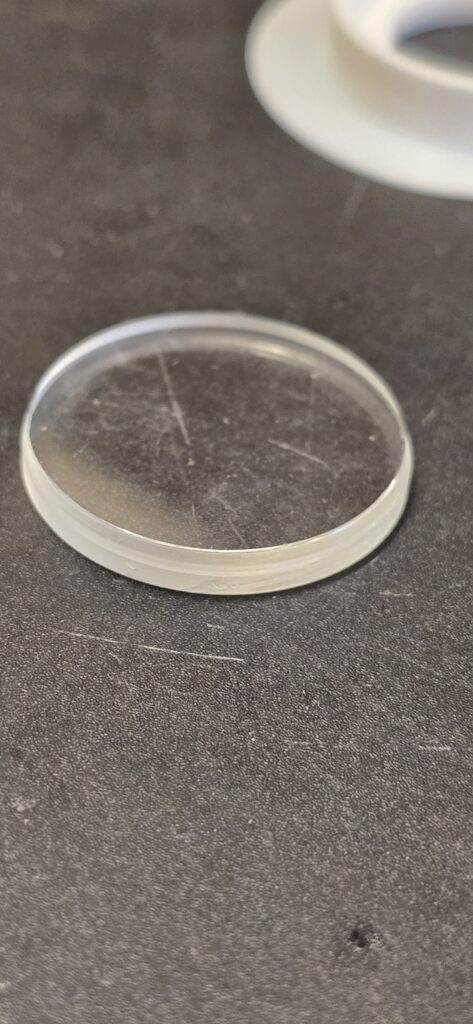
A more economical method can be borrowed from glued-on date magnifiers: modern glass adhesives are completely clear, do not yellow and resist UV. Instead of grinding in a step, two crystals can therefore be glued together.
Holder for positioning the crystals
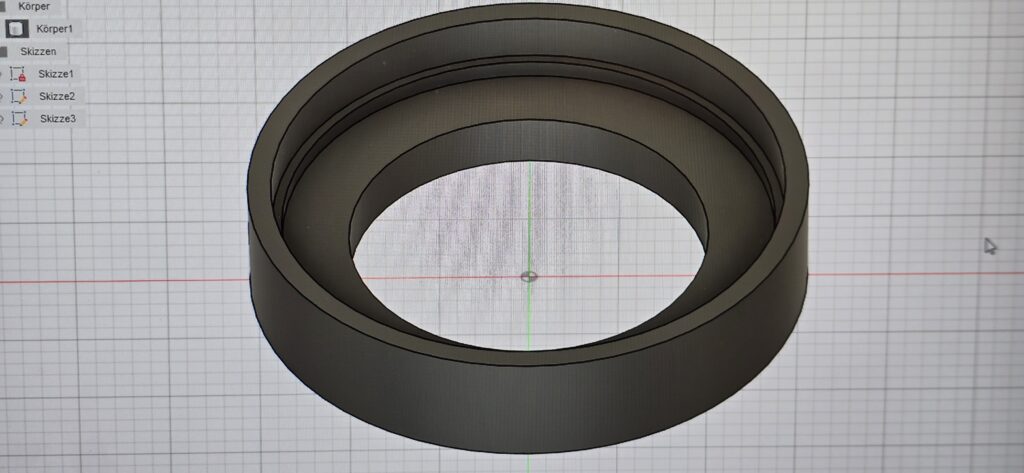
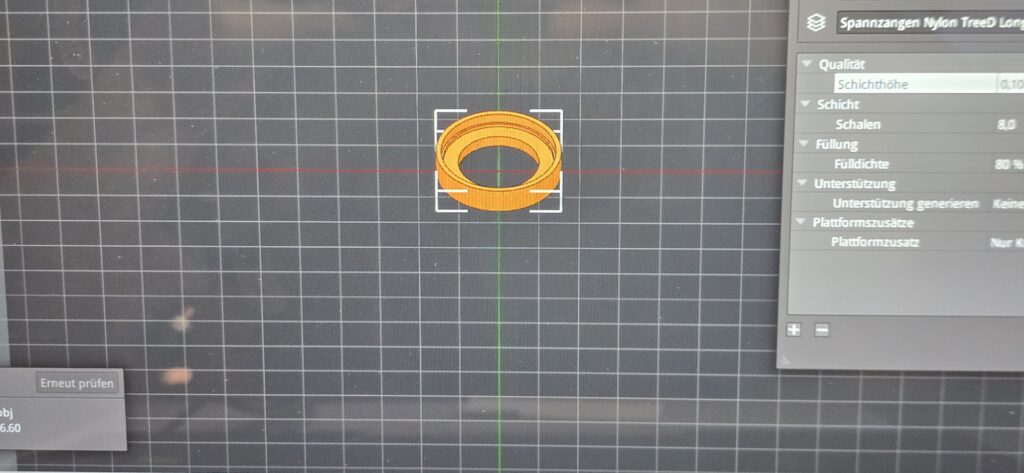
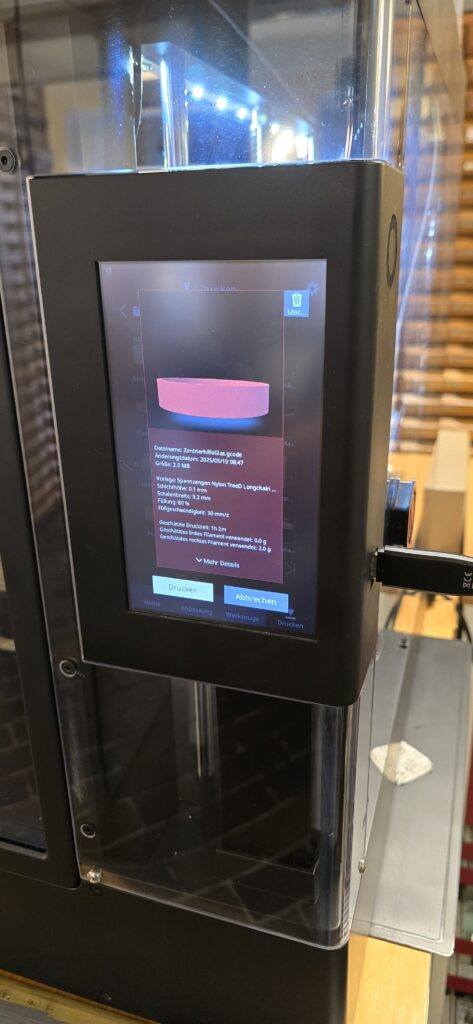
To position the crystals perfectly, it makes sense to quickly produce a holder on a 3D printer to keep them aligned while the adhesive cures.
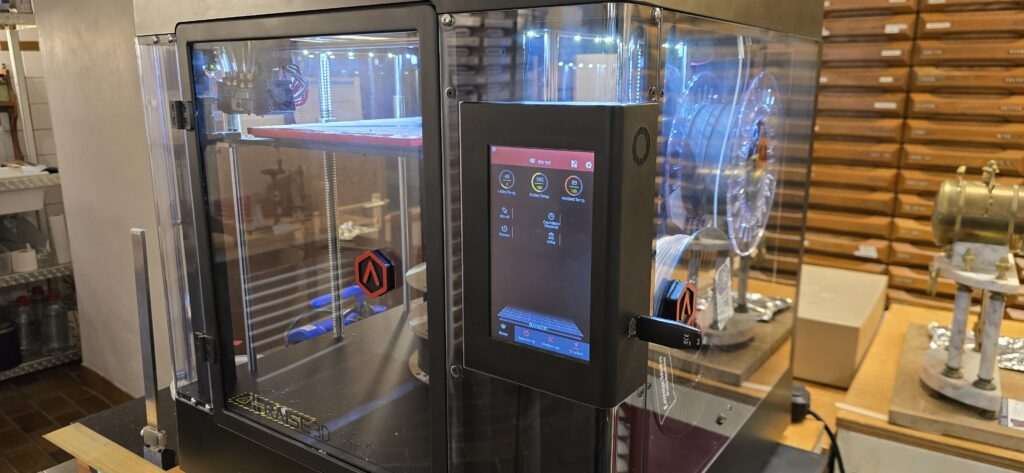
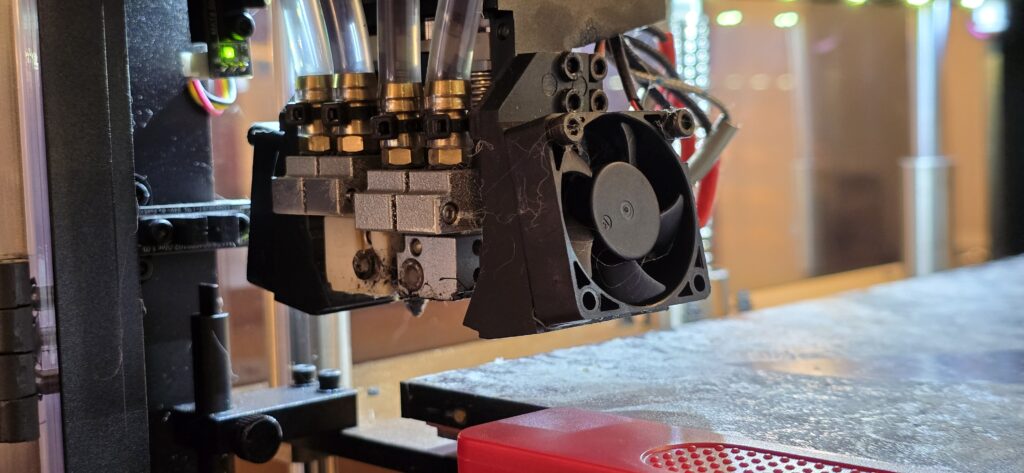
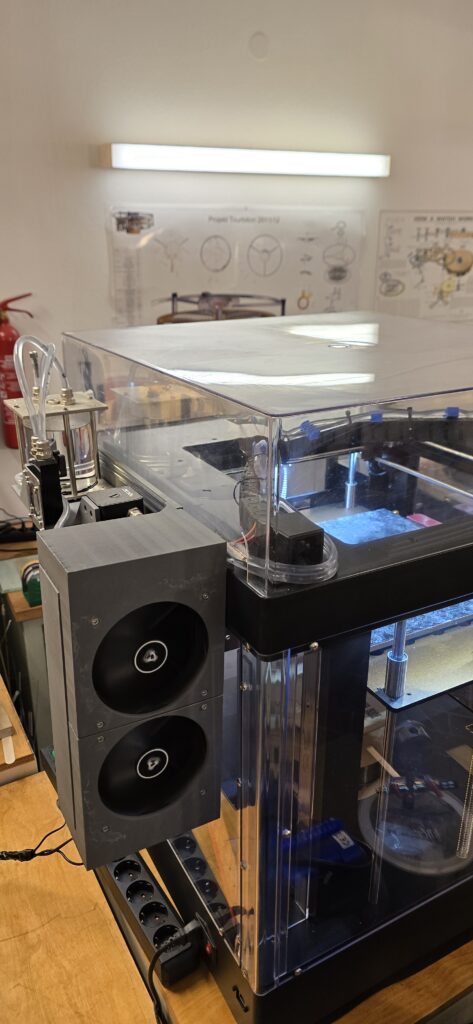
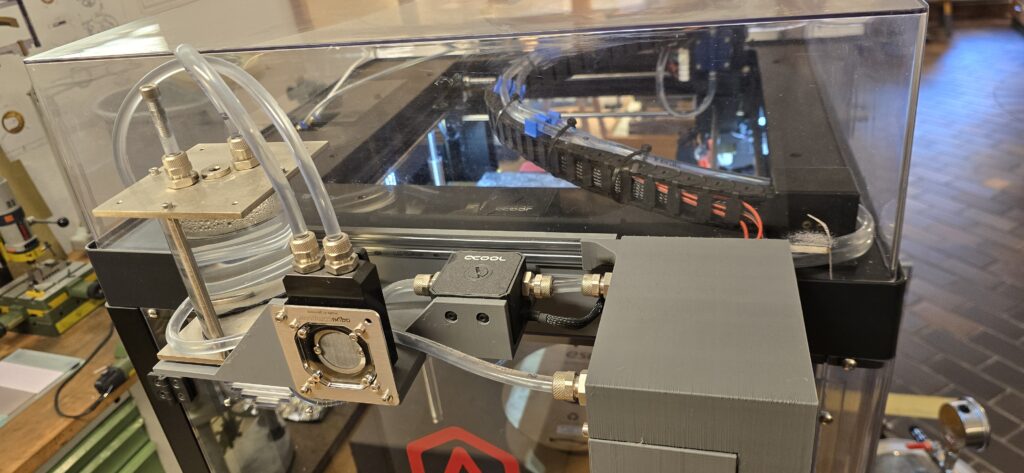
The 3D printer shown was fitted with water-cooled heat exchangers on the heat breaks to print nylon reliably even with very fine nozzles. The heat exchangers themselves were laser-printed in aluminium and have internal cooling channels. This significantly improved the print quality of an already solid printer. The pump, radiator and cooling pipes come from PC cooling accessories.
Gluing and removing air bubbles
The special adhesive is then placed between the crystals, which are held together with a clamp.
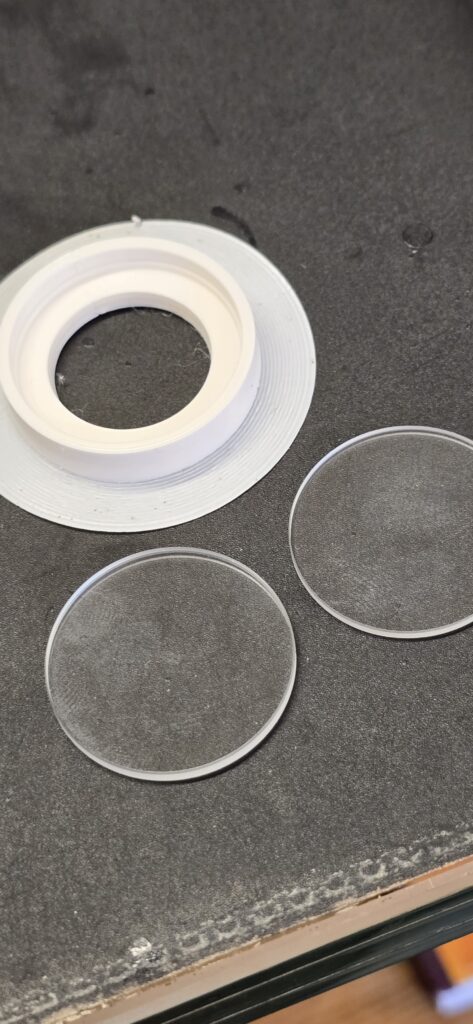
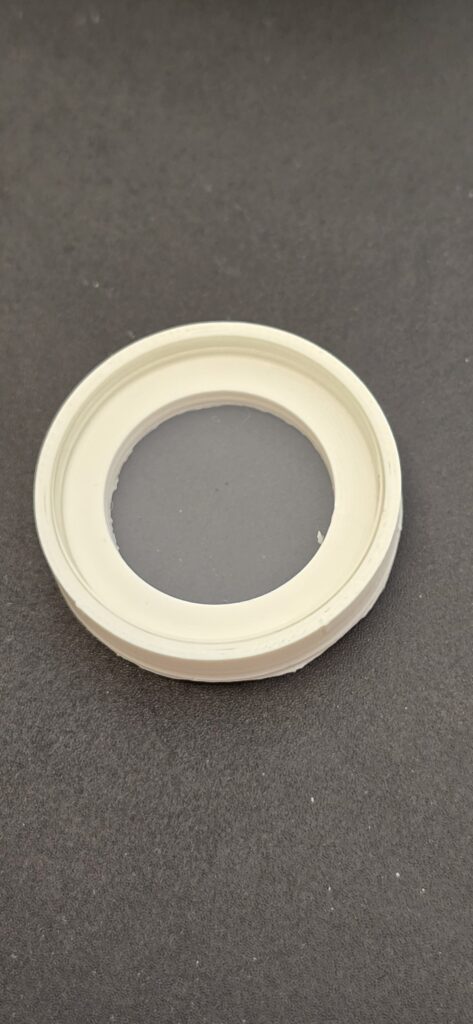
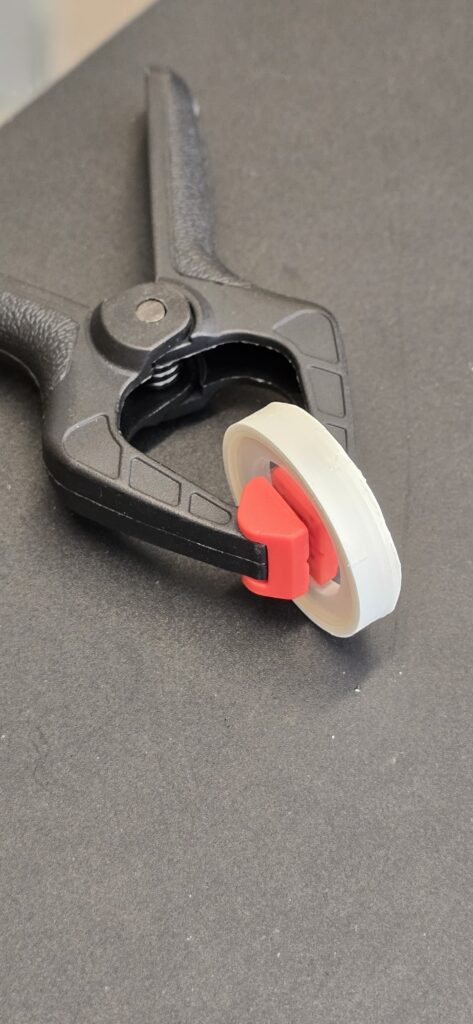
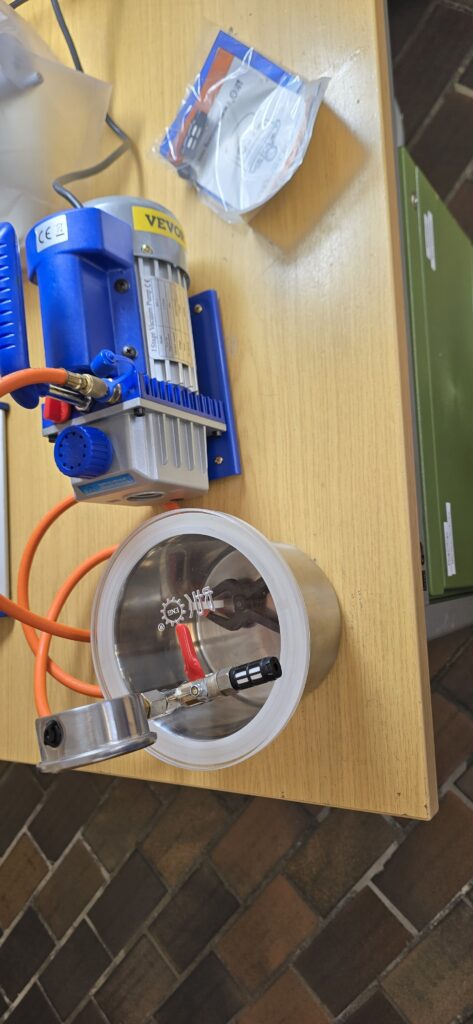
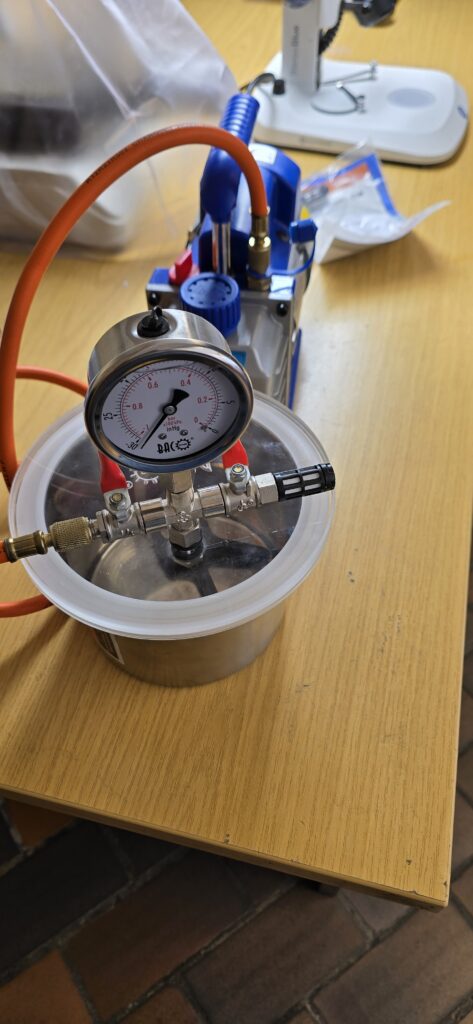
However, tiny bubbles are still visible. Fortunately, these can be removed easily with a vacuum bell jar. Under vacuum and with the clamp in place, the bubbles expand and move outwards until they disappear.
Curing and finishing
The crystal and clamp are then placed under a UV lamp for several hours until the adhesive has fully cured. Conventional curing units are far too expensive for occasional use (€2,000 or more), which is why even watchmaking suppliers sell UV units intended for nail design. These units are either far too weak or far too expensive. A considerably cheaper and better alternative is UV LED floodlights, available at very low prices with high outputs exceeding 100 W.
The crystal can then be pressed out of the nylon holder. Nylon is very difficult to glue, so the adhesive separates from the holder without exceptional difficulty.
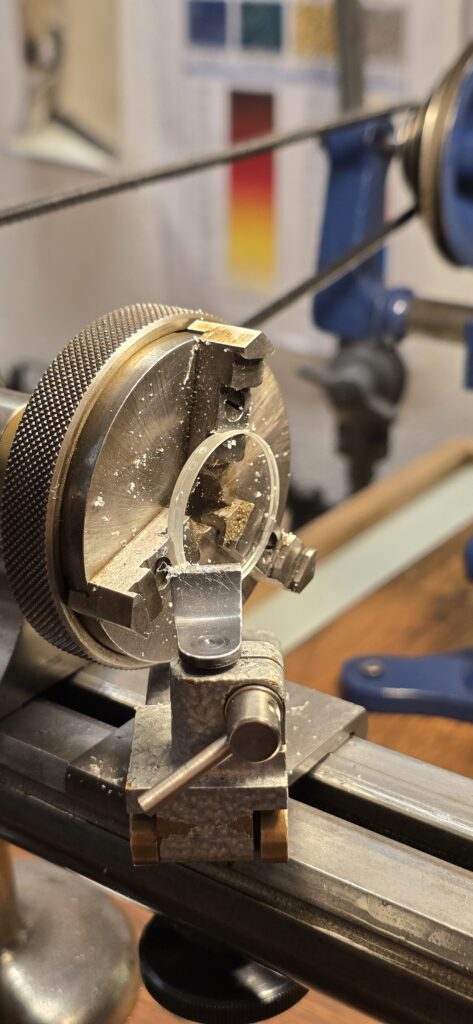
Some adhesive residue remains; this is quickly and carefully turned away on the watchmaker’s lathe with a sharp hand graver.
The combination of crystals, adhesive and curing time must suit the particular watch crystal and the product used. Follow the adhesive manufacturer’s specifications.