Repairing a 2824 automatic movement
One of my first repairs as a qualified watchmaker
Robin Israel
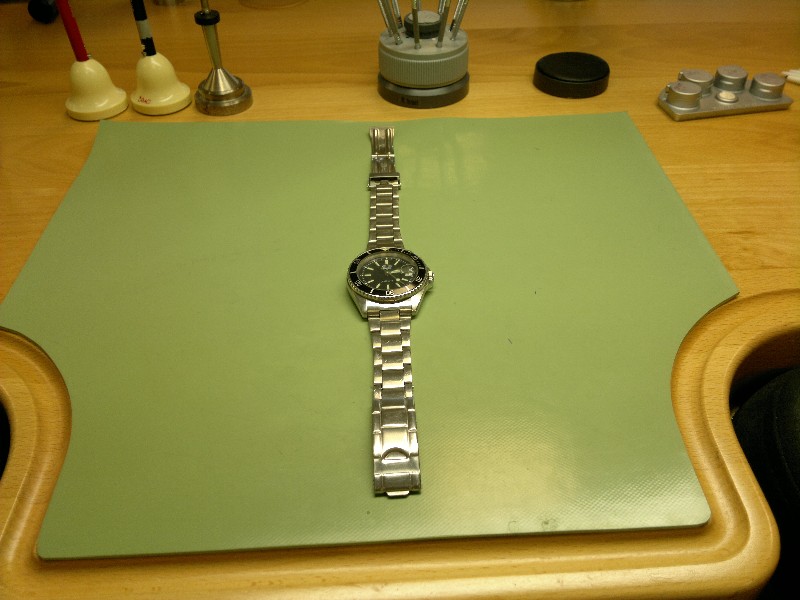
The watch is to receive a movement service: a complete overhaul of the movement. The case remains untouched. Before opening the watch, winding, hand-setting, date change and quick-set date are checked. The dial is examined with a loupe to see whether any initial faults can be found. The watch is then moved to identify unusual noises from the automatic winding system, followed by a brief check on the timing machine.
The case back is opened and the movement examined.
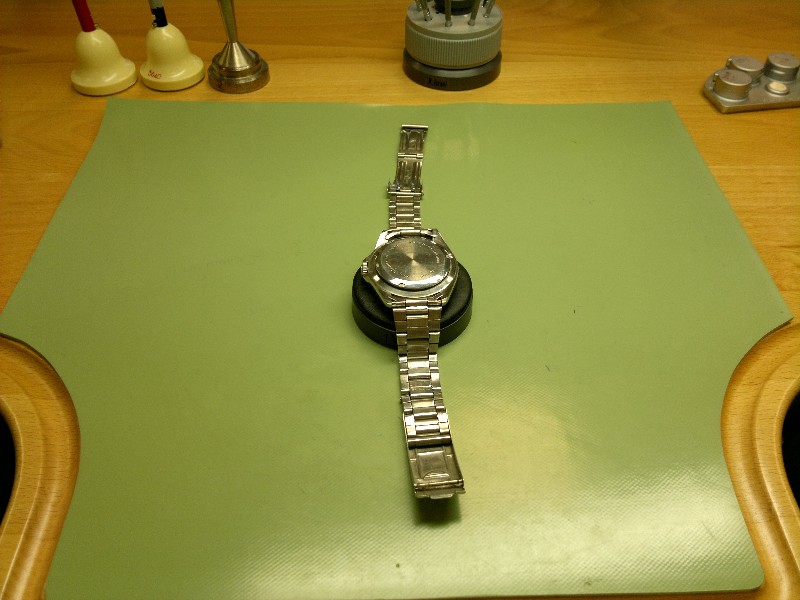
The movement is then removed from the case. The endshake of the automatic rotor and the function of the automatic winding system can already be tested.
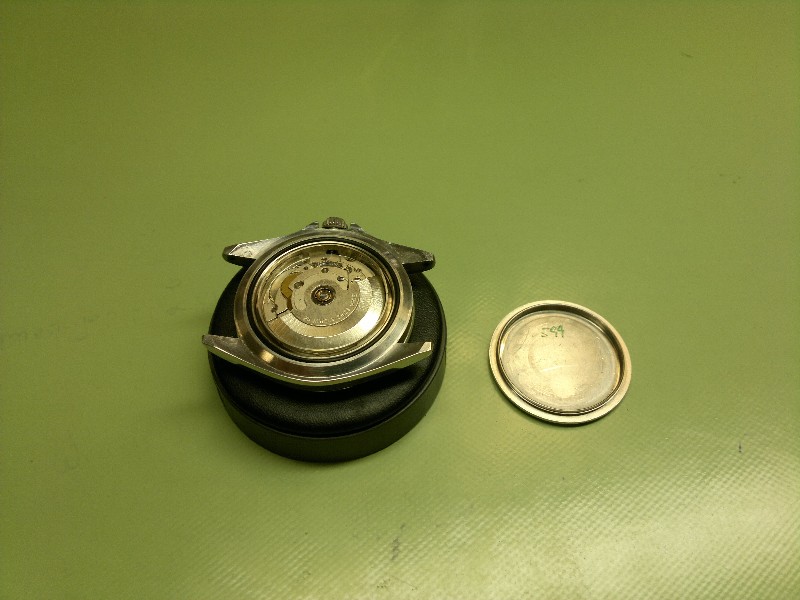
Many watchmakers write their initials or the repair date inside the case back after a repair. The last watchmaker has also written something inside this watch. It is poor practice, however, if the initials have been scratched in. This too is occasionally seen in watches.
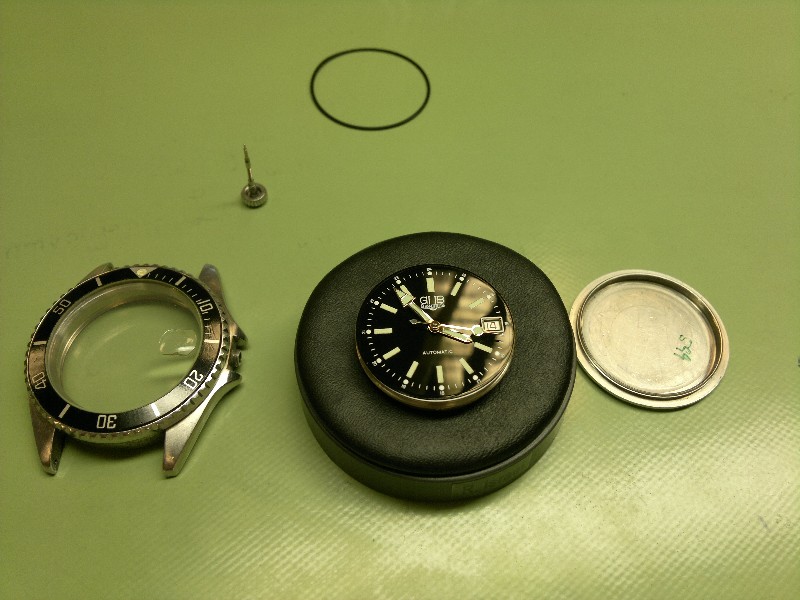
After uncasing, the motion work and dial are briefly checked, particularly for damage to the dial or hand collets before lifting the hands. The case is freed of the finest dirt particles so that the movement can be fitted into an absolutely clean case after repair.
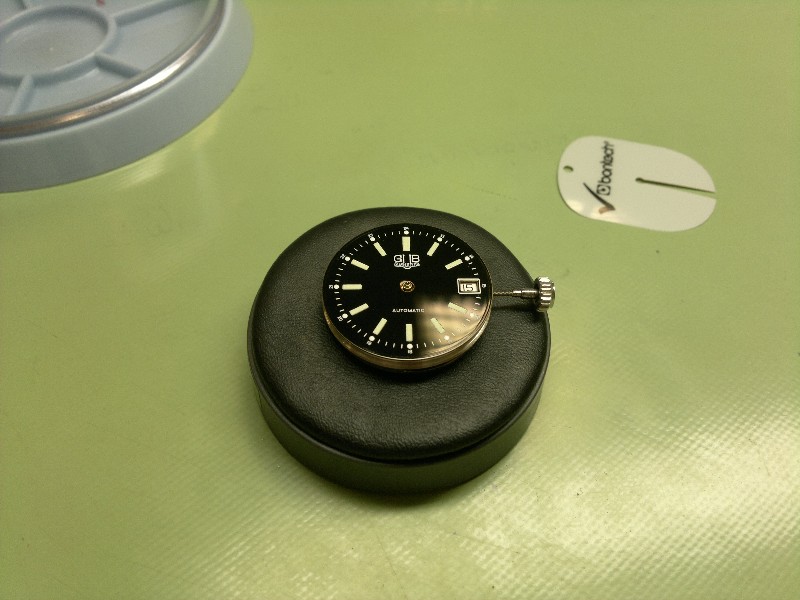
After lifting the hands, the dial is checked for concentricity and adjusted if necessary.
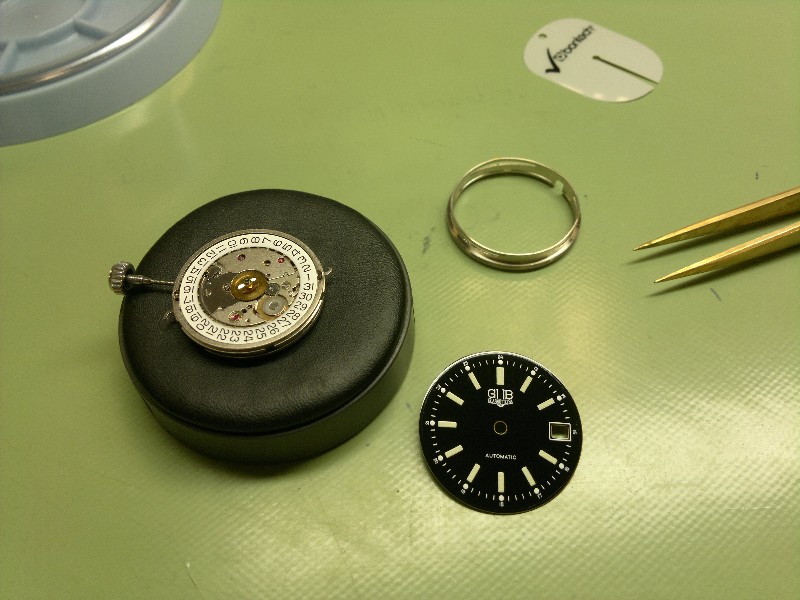
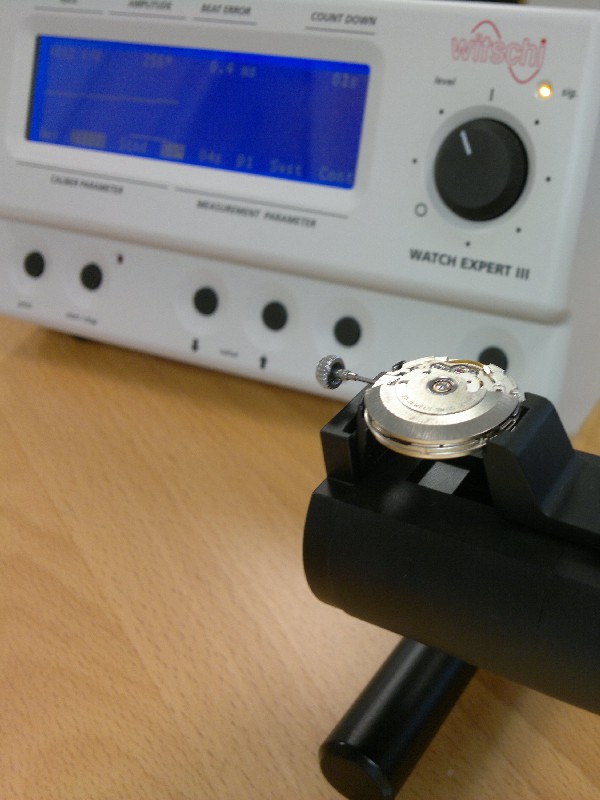
The dial and hands are stored securely under a dust cover. The watch is then demagnetised and tested more extensively on the timing machine so that possible defective parts and faults can already be recognised in its rate.
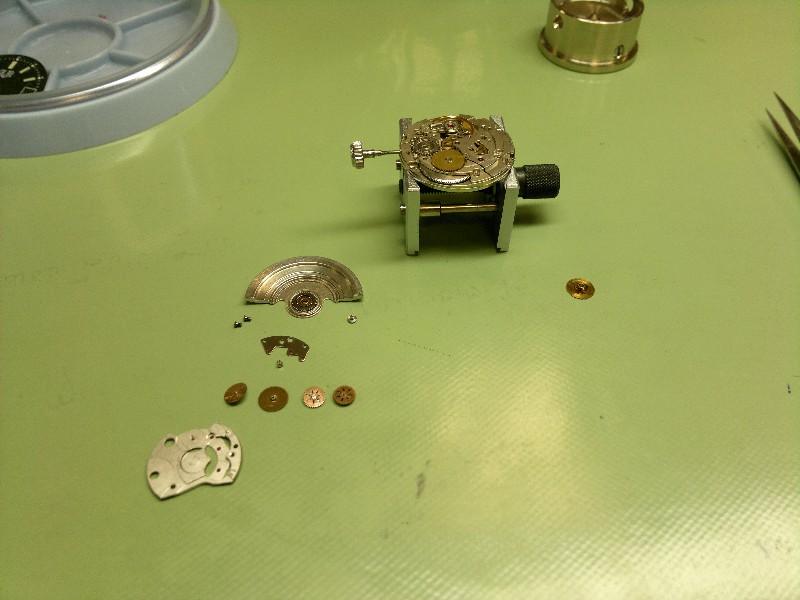
After this check, disassembly can begin. The automatic winding assembly comes first: its function, endshake and tolerances are checked while it is still assembled. It is then completely dismantled, the bearings and pivots are pre-cleaned with pegwood, and they are examined under the microscope for damage, particularly wear marks on pivots and teeth.
The date assembly follows. Here too, all functions and endshake are checked and any faults discovered are repaired immediately. If necessary, the date mechanism is briefly reassembled to check that the fault has been corrected. As with the automatic assembly, all bearings and functional points, especially the date-disc teeth, are finally pre-cleaned using pegwood and other cleaning aids. This is followed by another microscope inspection, looking particularly for bent teeth.
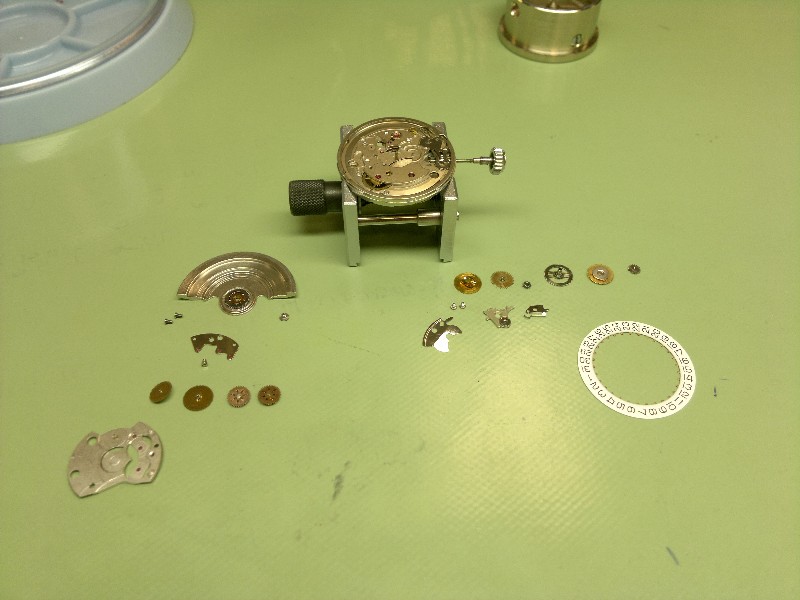
Once the movement has been reduced to its “base movement” (the working movement without additional modules), it is worth checking it briefly on the timing machine again to establish whether its rate has improved significantly since the previous test. If so, this indicates a fault in the assembly just removed, which should receive particular attention if no corresponding fault has yet been found.
When disassembling the base movement, certain special checks are necessary to ensure that all faults can truly be corrected. Thorough knowledge of Swiss lever escapement testing, and of escapements themselves, is essential.
Some checks to carry out while disassembling the base movement: check that the balance rim runs flat; check whether the shock protection “rocks” while the watch runs; examine balance-spring play in the regulator curb pins; check the spring’s flatness and concentricity; check all endshake; check that the escapement and balance components engage correctly; check the escapement’s safety mechanisms against shocks; examine all pinions for rust between the teeth; and much more.
The repair of the watch and individual component checks are covered in more detail under Uhrenkunde → Practice → Watch repairs and in the chapters about escapements, oscillators and other parts.
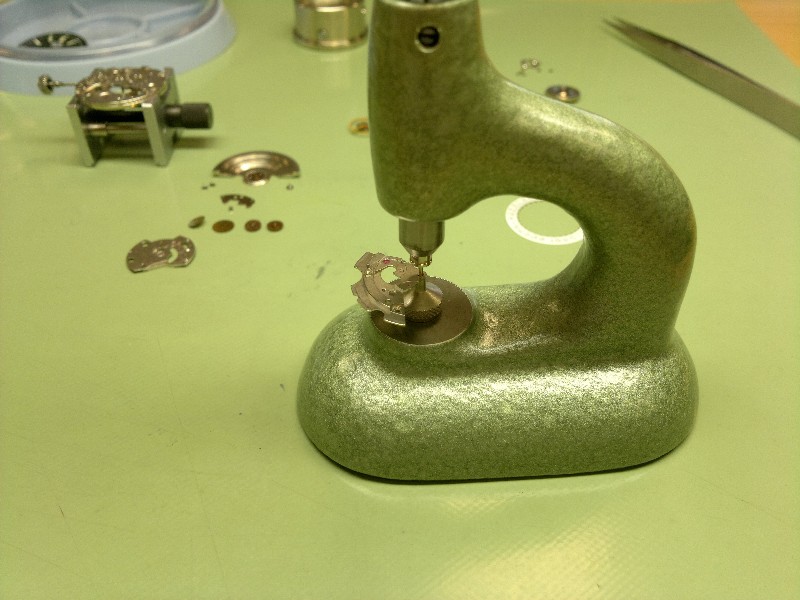
Faults found are always corrected immediately and checked directly to confirm the correction was successful. Endshake is corrected with the jewelling press where necessary (see photograph). After dismantling the base movement, every jewel, bearing and pivot is again pre-cleaned, along with all points bearing black wear debris or other contamination. After preliminary cleaning by hand, all components are again checked and examined under the microscope. Particular attention should be paid to wear marks on the fine pivots, worn pallet stones, a worn pallet fork and worn cap jewels.
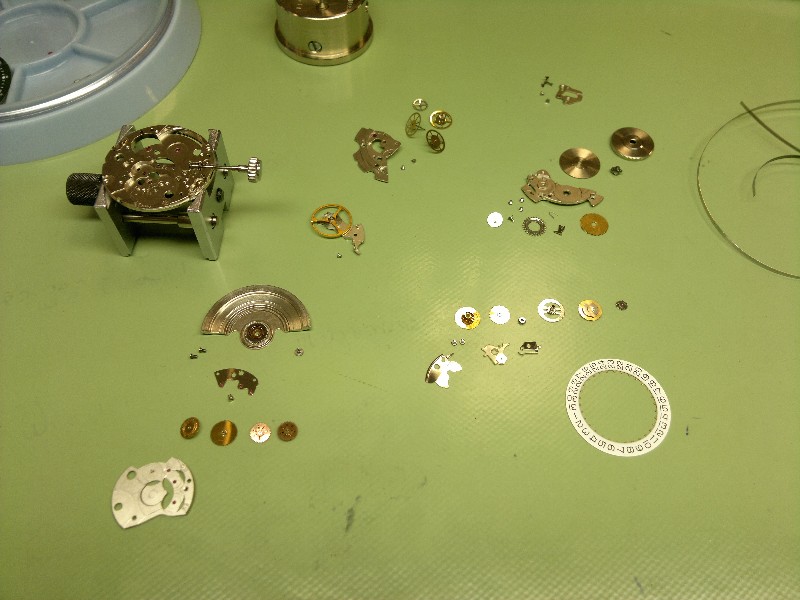
If the barrel is not replaced completely (often usual with new movements), it must be fully disassembled. The mainspring is wiped clean and drawn carefully through the fingers. A sensitive touch is needed here – : slight waviness is a sign of mainspring fatigue. The spring is also examined visually for bending and fatigue around its eye. Excessive bearing play of the barrel arbor must be ruled out in every case and corrected before the parts go into the cleaning machine.
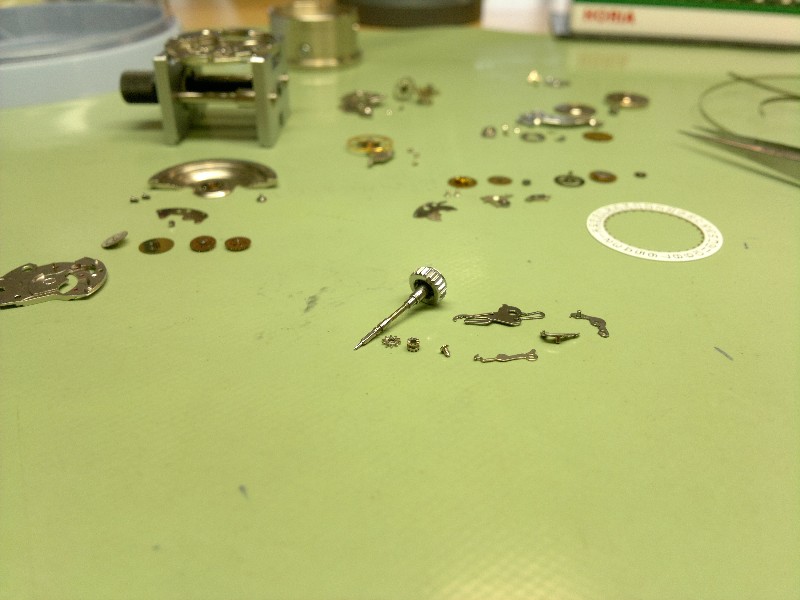
Finally, the winding and hand-setting mechanism is dismantled. This assembly most frequently shows rust and heavy contamination from wear. With frequent manual winding, the teeth are also often worn.
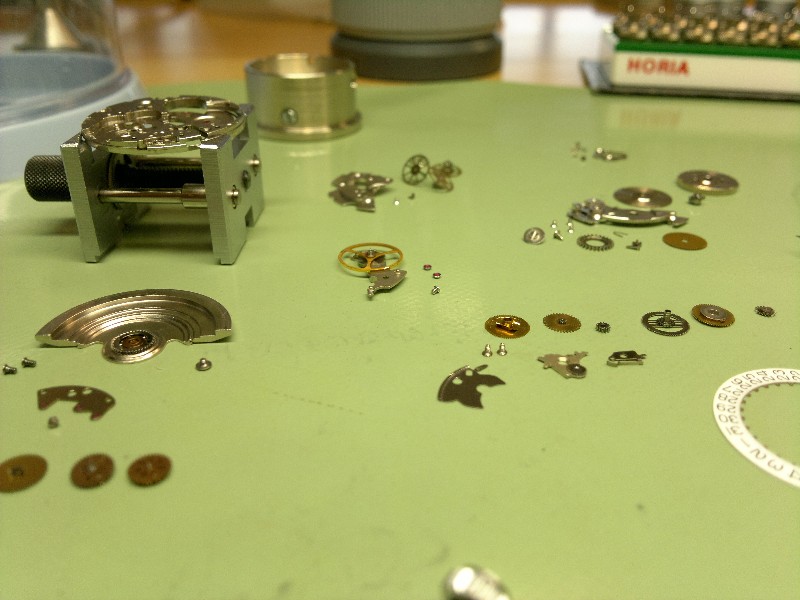
Before sorting the components into the cleaning basket, the balance cock and balance are screwed back onto the mainplate. The shock protection is not fitted: after disassembly and cleaning, the cap and hole jewels are placed in a particularly fine-mesh cleaning basket.
The watchmaker does not usually place movement components on the work surface, but sorts them directly into the cleaning basket. The parts were arranged on the work surface here only for the photographs.
The watch components are now cleaned in a special basket in a cleaning machine with several baths. The watch-cleaning machine is a specialist washing machine that brings the finest parts to perfect cleanliness. Preliminary cleaning of the individual parts by hand is nevertheless necessary for most movements, as the machine is unsuitable for removing stubborn and coarse contamination. Preliminary cleaning by hand also significantly extends the useful life of the very expensive cleaning fluids. Parts such as winding crowns or dirty movement retaining rings also do not belong in the watch-cleaning machine: they must be cleaned either by hand or in the ultrasonic bath.
After cleaning, the movement parts are transferred from the cleaning basket (on the left in the photograph) into a dust cover to prevent dirt and airborne dust contaminating them on the work surface.
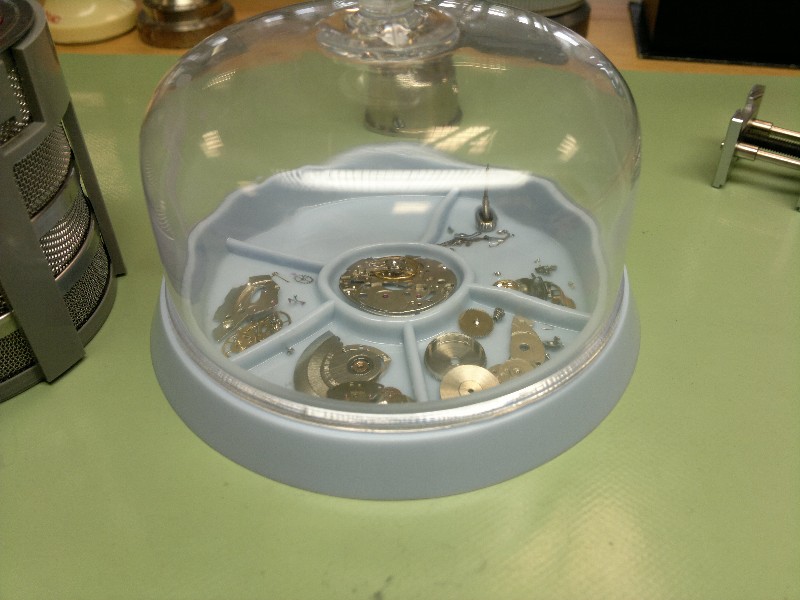
The movement is reassembled piece by piece and lubricated with various specialist oils and greases. At the same time, each component and assembly is checked again for function, endshake and damage, to make absolutely sure nothing has been overlooked. The watch is tested several times on the timing machine during assembly: first after assembling the base movement, then after each further assembly is fitted. The escapement receives epilame treatment according to a carefully devised procedure to ensure longer oil retention. When lubricating the escapement, meticulous attention is also paid to perfect cleanliness, lubricant quantity and placement. Escapement lubrication must be checked again after 24 hours.
After assembling the movement, the dial and hands are fitted and the movement is checked on the timing machine and regulated again. All functions, such as date change, are of course also checked, and correct positioning of the hands is ensured in various positions.
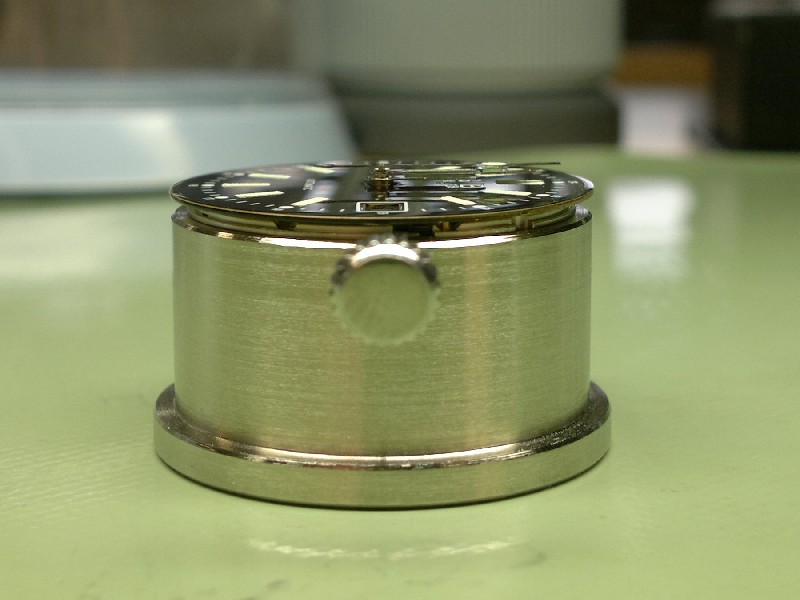
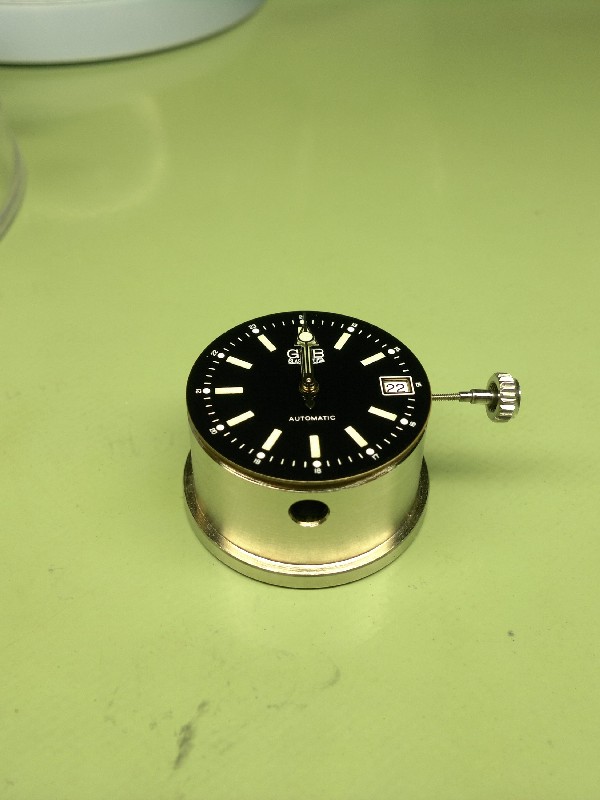
Finally, the movement is cased up again and the watch receives its final regulation. It is tested at full wind and after 24 hours. Automatic winding is also tested on the watch winder. To determine the power reserve, the watch is allowed to run down completely once after being fully wound.